Alberta Premier Pushes For Border Czar As Tariff Deadline Approaches
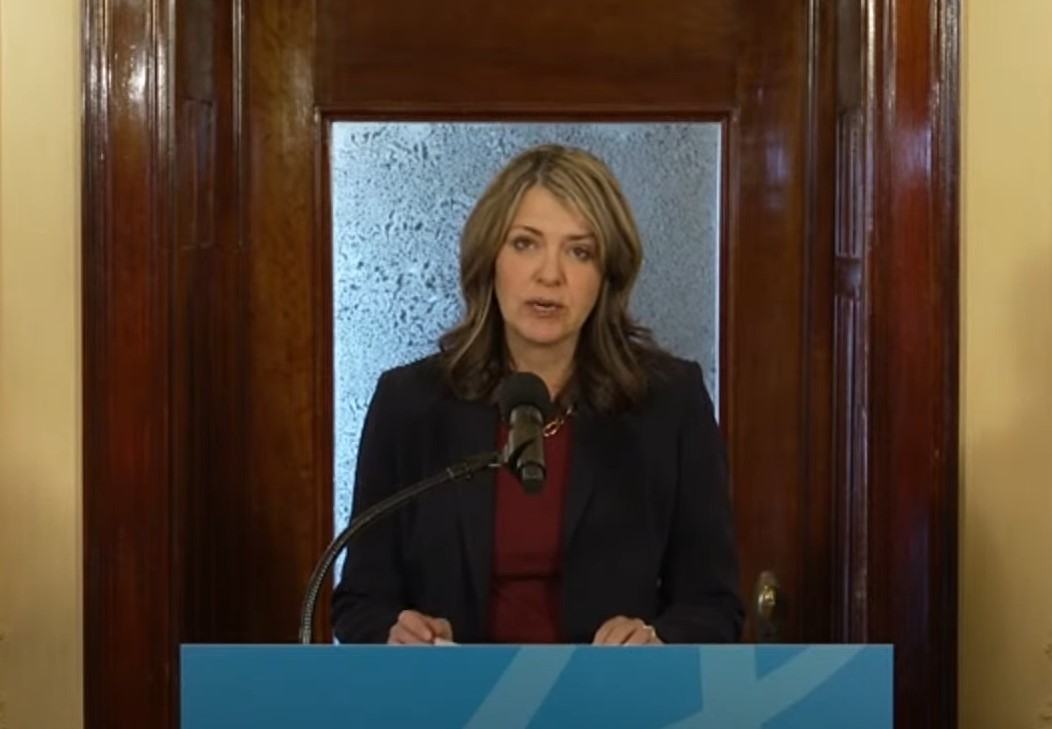
The federal government needs to take urgent action to stem the flow of fentanyl and illegal migrants at the border to avoid punitive tariffs expected to be placed on Canada by the U.S. this weekend, Alberta Premier Danielle Smith said after meeting with federal and provincial counterparts on Wednesday.
Smith said the federal government needs to immediately appoint a credible “border czar” to work directly with the U.S. administration on securing the border, and it needs to be announced before Feb. 1, the deadline U.S. President Donald Trump has put on bringing on tariffs.
“The one thing we can do this week in just the next couple of days to have the best chance to avoid tariffs is to show clear and unequivocal action to secure the border,” she said.
“This should start with appointment of a Canadian border czar to work with the new American border czar to crack down hard on fentanyl and illegal migrants.”
Smith’s comments followed remarks by U.S. commerce secretary nominee Howard Lutnick at his confirmation hearing that Trump remains committed to the Feb. 1 deadline.
"They’re not a tariff per se,” said Lutnick. “It is an action of domestic policy. Shut your border and stop allowing fentanyl into our country. This is a separate tariff to create action from Mexico and action from Canada.”
“And as far as I know, they are acting swiftly. And if they execute it, there will be no tariff. And if they don’t? Then there will be. But it’s an action-oriented model.”
Further tariffs remain on the table, he added, as the new U.S. administration advances its economic plans. Those potential tariffs could be announced in April.
Alberta has been working to increase border enforcement, said Smith, but it requires a national effort.
“And I’ve been clear from the beginning that we must take President Trump’s statements on the border security seriously and to take action immediately rather than focusing on inflammatory rhetoric around the issue.”
Securing the border is only one step in avoiding tariffs, she added.
“Is this likely to end the threat of tariffs? I don’t think so. I think there will be other things we need to work on, and we will do so. But I am convinced after speaking with dozens of U.S. representatives, administration officials and the president himself that this is the most important first step.”