Former Finance Minister Morneau Calls For ‘Careful’ Thought With Oil And Gas, Retaliation In Tariff Talks
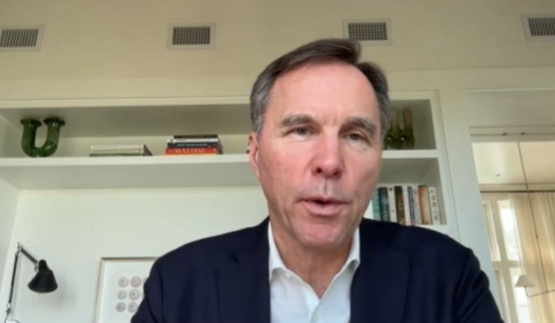
The role of Canadian energy exports in the country’s ongoing efforts to avoid tariffs from new U.S. President Donald Trump is not a decision that can be taken lightly, says Canada’s former finance minister Bill Morneau.
He participated in a virtual event hosted by KPMG this week. During a question-and-answer period, Morneau was asked what he anticipates Canada’s position will be on the sale of oil and gas and other raw materials to the U.S. if the Americans impose tariffs.
“That is a pretty important question,” he replied, noting the “need to think very carefully about taking a data-driven approach.
“In thinking about oil and gas exports, obviously that is a very significant issue for the Canadian economy, so I think we want to be very careful before we decide to take a measure like that, that would have implications for us, negatively; implications for our own economy and our own national unity that would be potentially problematic,” continued Morneau.
In terms of these discussions with the U.S., Canada’s Energy and Natural Resources Minister Jonathan Wilkinson has said “nothing is off the table.”
Conversely, Alberta Premier Danielle Smith pushed back on restrictions around oil and gas. In a social media post in January, she wrote “Alberta will simply not agree to export tariffs on our energy or other products, nor do we support a ban on exports of these same products.”
On the question above, Morneau went on to say, “I expect the government will be very careful there and think about how we can find a way to get to the table without resorting to things that could be potentially more damaging. But I think we will see lots of back and forth and that decision will not be resolved quickly.”
This webinar focused on a number of topics related to tariff impacts.
Morneau served as Canada’s finance minister from 2015 to 2020. During his time in office, he oversaw steel and aluminum tariff negotiations with the U.S. administration in 2018.
Regarding this period, he said: “I have a fair bit of scar tissue from the first go-around with the Trump administration.”
Morneau said these talks took longer than expected, with tariffs from the U.S. lasting nearly a year.
“That’s a big lesson that we might have a fair number of months here to get through,” he added.
While renegotiating the NAFTA agreement in 2018, two components stood out, including a so-called charm offensive, highlighted the former Liberal Party politician.
This is where political, business, and community leaders emphasized to the U.S. the benefits of the cross-border relationship between the two countries. Morneau says this remains important in current day talks.
The second piece was retaliatory tariffs that Morneau said were specifically intended to deal with the political framework at that time.
“Donald Trump was running for re-election, so those were important,” he said. “I think we are going to need to think about those more carefully in the context that we have today: it is a new administration, a re-election is not right around the corner, there’s a different impact on our economy versus their economy.
“But as we come up with those negotiating strategies, clearly the government is going to need to understand what the impacts are on individual businesses [and] what the opportunities are from a business standpoint.”
Morneau said there is a real question about the scale of the impacts from tariffs on the economy, but also what happens if Canada retaliates.
“I think we need to be very careful about that because retaliation would not only have a bigger damage on our economy — so, we need to think about it carefully — but also create knock-on impacts like inflation that would present additional challenges,” he said.
Identifying the intent of these tariffs needs to happen as quickly as possible, according to Morneau. If it is, in fact, related to border security and defense spending, he said that is a “real collision of mutual interests” between the countries.
If it is instead related to investment in the U.S. or rethinking of trading relationships to enable the U.S. to reshore manufacturing, he added, “we want to be inside the tent.
“That is important for us, but not easy to negotiate given we don’t share all of those goals.”
Morneau said the Canadian government has to see this as an important moment to ensure a good trading relationship with the U.S. and to enhance future prosperity in Canada.
Ottawa and provincial governments need to think about what they can do to enhance the country’s productivity, he went on to say.
To that end, one thing Morneau said he often speaks about is “breaking down interprovincial trade barriers, which would have an advantage for businesses … and for our overall economy.”