Natural gas/LNG LNG Canada Launch: Energy Services Prepares For Potential Surge As Market Dynamics Shift
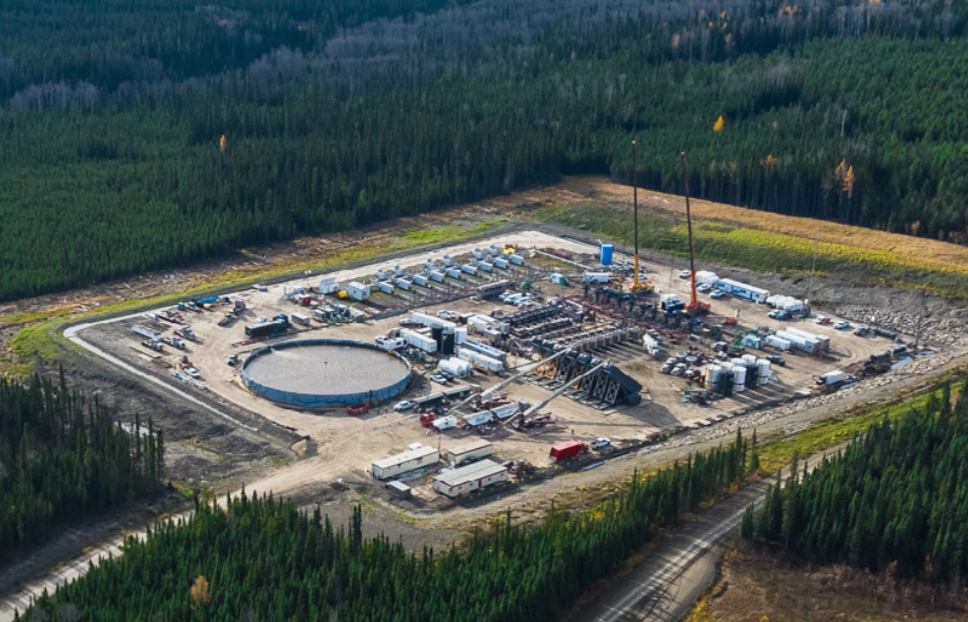
As LNG Canada prepares to come online and the Canadian LNG industry takes off, pricing for many energy services will “surely climb,” driven by increasing labour costs, says Mark Quesada, senior analyst at Rystad Energy AS.
He foresees rates increasing for high-spec rigs and remaining strong for fracturing.
“Frack pricing will likely continue to hold with some premium for next-generation equipment,” he said, adding that sand costs will keep climbing as domestic providers largely sell out of product and the Northern White Sand providers remain highly concentrated between two or three suppliers.
Rail costs seemingly will “always rise” as well. “I see no relief in landed sand costs until domestic capacity expands, which is likely a 2026-27 story.”
Steve Glanville, president and chief executive officer of STEP Energy Services Ltd., said his company is engaged in conversations with large producers committed to Canadian energy. With LNG Canada’s first phase approved and more projects likely on the way, he is hopeful for increased activity.
STEP is focusing on completions and transportation of its proppant from Wisconsin, investing in this critical supply chain for future operations.
“To have consistent types of increases in work activity, the whole supply chain from getting sand from Wisconsin to Northern Alberta requires sophistication. We have been investing in different sorts of AI software to know exactly where the loads are located and how to get them to the location. We’ve invested heavily into our ‘last mile’ solutions business — getting it from transload to the wellsite.”
On the AI front, Gurpreet Lail, president and CEO of Enserva, said energy services firms have already integrated artificial intelligence and other advanced technologies into their processes, whether that be mobile technology, using data analytics to solve problems, or machine learning.
“Many members are using IoT in their operations. [Energy services and manufacturing] have always been at the forefront of innovation and technology.”
In terms of cutting-edge technology, new motors and rotary steerables are enabling drillers to achieve benchmark wells, as seen with Precision Drilling Corporation’s Montney deployments. These advancements reduce costs, ensure consistent year-round operations, and enhance the ability to efficiently organize and store drill pipes, noted Quesada.
“Rig contractors with high-spec AC rigs I’m sure have had and are having discussions around term contracts. With demand for this spec of rig increasing, term and pricing will surely follow suit, especially if there are costs associated with rig moves or upgrades to address demand on the margin.
“With the frack market being more balanced, operators are more open to heading to RFPs more frequently to secure better pricing or top-end next-generation equipment.”
Meanwhile, the analyst added, chemical providers are tweaking mud systems while OFS efforts towards high-tech fracturing systems enable operators to save on their fuel costs, lowering emissions.
“Many frack providers have gone a step further, electrifying their ancillary equipment such as blenders to further reduce diesel consumption. Simulfrac and trimulfrac operations have increased in the U.S., and I would expect a similar trajectory here in Canada.”
Rate discussions
Discussions on rates are always ongoing, regardless of LNG Canada and other LNG projects coming online, Lail said, but much of the business for Enserva members is already tied to natural gas.
“Our service companies are not only watching closely as some of the construction projects come online and are getting built, but they’re also looking at what financial investment decisions look like and how those impact individual companies and our sector as a whole.”
She added: “With Cedar LNG being announced as aligned and ready to go, I think it’s a huge positive sign for our industry that helps with investment decisions and will add momentum to what we are already seeing. It also provides business outlines. Our remote workforce lodging members are in that negotiating space to determine the workforce, the need, and what that looks like. If this project is a success, then there will be more coming down the line.”
Enough equipment
Trican Well Services Ltd. has enough equipment available to ensure it gets a return on its investment when upgrading its fleet, noted Brad Fedora, president and CEO. Fedora said it is important that service companies strive to match their predictive activities with equipment spending so as to not overcapitalize their assets.
In terms of the Canadian pressure pumping industry, he added, it has undertaken a near “full-scale refurbishment or retrofit” in the last three years to compensate for a lack of equipment for the several years prior, ensuring state-of-the-art assets that lower emissions and increase use of natural gas versus diesel.
“We knew what was coming. We were able to get in front of it, ensuring we could upgrade our fleet in advance of what industry will need to complete all these frack-intensive natural gas wells required for LNG export.”
U.S. moves
Discussions on moving rigs and equipment to Canada from the U.S., possibly requiring upgrades, involve term commitments, high leading-edge rates, as well as operators’ capital, Quesada suggested.
“Frack pricing has largely held flat. I suspect this continues through the short to medium term with discussions mainly centering on operators’ ability to secure next-generation — natural gas-capable — equipment.”
Thanks to its geographical diversity, STEP was able to move several assets from the U.S. into Canada back in Q4 2023, allowing for increased activity north of the 49th Parallel, Glanville said.
He added the industry has increased its overall pumping efficiencies, attaining more well completions within shorter time periods, with pad-drilling technology allowing for full-year cycles of utilization days.
“As we enter 2025 and finally get LNG exports, you’ll see an increase in natural gas prices, which will also impact capital programs for the better. We’re expecting that in late 2024 and into 2025.”