Incorrys Says Business, Global Environmental Case For More Canadian LNG Strong
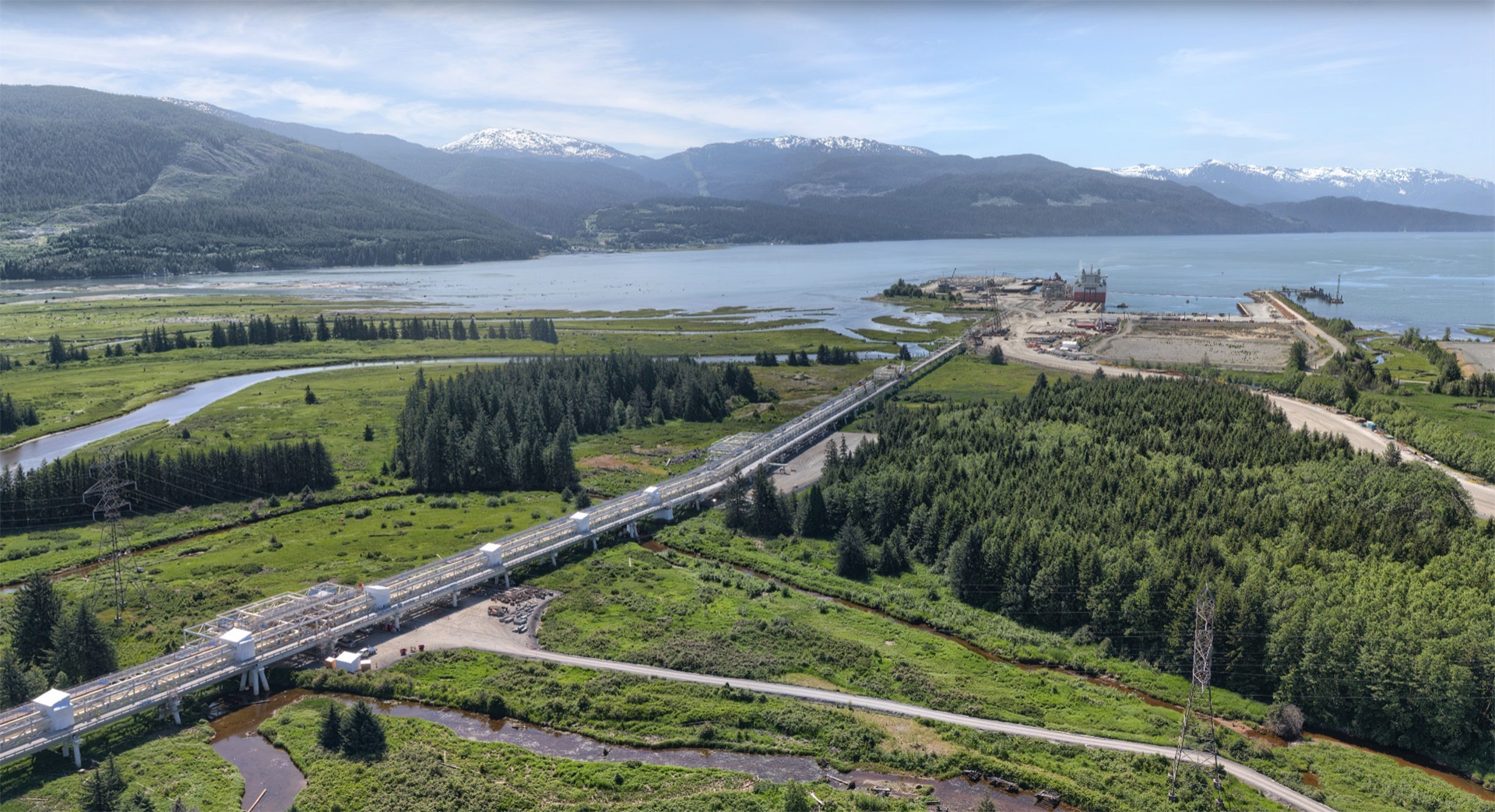
A recent Incorrys Inc. analysis suggests there’s a strong business case for Canadian LNG and that it can have an “outsized impact” on global CO2 emissions, but federal and provincial policy impediments have erected a “cage” around opportunities for increased domestic LNG development and exports.
“We’re looking at, say, the Cedar project versus a U.S. Gulf Coast project — what’s the landed costs, etcetera — and we seem to have an advantage in Canada. But because our governments have taken a hard-line on meeting the Paris Agreement commitments, we can’t get anything done here. We actually get penalized,” said Ed Kallio, executive advisor with the firm.
“So it all comes back to this cage that’s been built around our investment, our companies, our engineering companies — [government] has built a legislative cage and they’re turning the key. We’re stuck in this cage.”
In late June, Cedar LNG Partners LP partners, the Haisla Nation and Pembina Pipeline Corporation, announced a positive final investment decision (FID) on the Cedar LNG project. That announcement was made after an interview with Kallio and Cameron Gingrich, manager — markets and strategy.
The facility will have a nameplate capacity of 3.3 million tonnes per annum (mtpa), located in the traditional territory of the Haisla Nation, on Canada’s West Coast.
The facility will be powered by renewable electricity from BC Hydro.
LNG Canada is also contemplating a Phase 2 for its initial project, which is currently expected to begin operations in early 2025.
In its analysis, called “The Business Case For Canadian LNG – Part 1,” Incorrys said Canada’s world class and low-cost Montney, Liard and Horn River shale plays can “support several more” Canadian LNG export projects which could ultimately offset most of Canada’s total CO2 emissions, and certainly all of Canada’s total emissions from the oil and gas sector.
“With the obvious global GHG emissions reduction on potential of Canadian LNG, why are policymakers in Canada not pushing for more?” the firm said in the report.
“It’s all about the Paris Agreement, and national and provincial emissions reduction targets flowing from Paris and other international treaties which have been legislated into national law in signatory nations, including Canada.”
Kallio noted that Article 6 of the Paris Agreement presents the biggest roadblock for the future of LNG development in Canada.
“We wanted to get this irrational Article 6 of the Paris Agreement out there for people to understand because everything comes back to that,” he said.
In its analysis, Incorrys said Article 6 provides a mechanism for nations to trade emissions credits, which would seemingly be available to Canada should LNG be produced here, to displace higher emitting power in a host country.
“Article 6 addresses co-operative approaches in implementing and achieving the carbon reduction goals set out in the agreement. It specifically focuses on market and non-market mechanisms that can facilitate the mitigation of greenhouse gas emissions and support sustainable development,” Incorrys said.
“However, significant issues revolve around the negotiation and agreement between countries regarding the implementation of co-operative approaches, particularly in the context of internationally transferred mitigation outcomes [ITMO].”
And that’s an issue, Kallio said, but one that could, and should, be resolved.
“In the Paris Agreement, Article 6 is a voluntary trading agreement. What does that do? The party that is actually benefitting now, which in our example in the analysis is China, are they going to trade credits with Canada? Not likely,” he said.
“So as a potential solution we’re saying, ‘Well, this needs to be written in that it’s not voluntary or that Canadian projects can use those offsets internally and where it will benefit them,” Kallio added.
He said this would require political will and a recognition that Canadian LNG can have a feasible — “and it is a feasible role” — in driving global reductions in CO2 emissions.
“We have the existing technologies, we have Canadian expertise and we’ve got this huge resource endowment currently underutilized because of this international framework, which includes the Paris agreement,” Kallio said.
“This is part of the legislative and regulatory cage that they’ve built around us in their zeal to eventually eliminate hydrocarbon production in this country. What is the end game? Is the end game to reduce emissions or is the end game to shut down the industry as we know it?”
In its analysis, Incorrys noted that for Canada to benefit from LNG economically and in its efforts to reduce global CO2 emissions, it must negotiate bilateral or multilateral agreements on the transfer and acquisition of ITMOs.
“This involves determining the terms, conditions, and modalities of such transfers, including the quantity, quality, and timing of mitigation outcomes exchanged. There is no global co-operative framework that is automatic; all emissions targets flowing from the Paris Agreement are on a national basis,” the firm said.
“Countries jealously guard their own emissions reductions. This therefore leads to LNG producing countries’ reluctance to approve or encourage LNG liquefaction projects, as they will see an increase in local emissions.
“The current framework is a great deal for host nations, and a rotten one for source nations such as Canada.”
The impact on global emissions, not just domestic, important
Kallio said that while Canadian LNG projects will increase domestic CO2 emissions levels, the impact on the global emissions profile shouldn’t be underestimated.
Incorrys analyzed Canada’s 3.2 bcf/d of gas exports, and their net impact on global GHG emissions, if used to displace coal-fired power generation in Asia.
For the LNG Canada project alone, which is due to come online in 2025, Incorrys forecasts a “minimum net reduction” in global GHG emissions of 75 million tonnes per annum (mtpa) of CO2e.
Here’s the firm’s breakdown:
- LNG Canada upstream gas production, transportation and liquefaction raises B.C. and Alberta CO2 emissions by 13.7 mtpa (Scope 1 and 2 emissions).
- This volume of exported LNG used in Asia to produce power will emit 63 mtpa (Scope 3 emissions).
- This gas-fired power displaces Asian equivalent coal-fired generation emissions of 152 mtpa (Scope 3 emissions only).
“Basically, it’s pretty clear that although the LNG Canada project increases CO2 emissions in Canada by roughly 13 million tonnes per annum when you include both the upstream and the downstream that the offset in Asia from that LNG — that natural gas being used in power generation — has a net benefit of 75 million tonnes per annum of reduction in global emissions,” Kallio said.
“So that’s the nut of it.”
Incorrys believes there are a couple of “achievable solutions to overcome the policy bust” of Article 6 without penalizing extracting and processing nations, including Canada, that currently incur an increase in local emissions, which then count against their own (national) CO2 reduction targets.
In a nutshell, the first solution, according to the firm, is that Article 6 must be “strengthened to ensure that credits are transferred automatically” from nations utilizing lower CO2 intensive forms of energy produced elsewhere to replace more CO2 intensive energy sources at the burner tip, essentially by replacing coal with natural gas in the production of electricity.
As for the second solution proposed, Incorrys believes the Canadian federal government should allow firms that can show verified emission offsets via trade to claim those offsets, including against the proposed CO2 emissions cap for the oil and gas industry, or a percentage of the offsets, within Canada and trade them on carbon credit markets.
“Both solutions would require a willingness of the Canadian government to lobby and push for change, internationally with respect to solution one, and nationally for solution two,” Incorrys said in its analysis.