Sponsored Peaskie Minerals Ramping Up Frac Sand Production To Serve WCSB
Peaskie Minerals Ramping Up Frac Sand Production To Serve WCSB
The shale and tight-formation oil and natural gas wells drilled in Alberta and Northeastern British Columbia must be hydraulically fractured to produce the resource to the surface before shipping it to market. In a way, frac sand is the lifeblood that keeps the energy sector running.
A made-in-Alberta company recognizes this fact and is aggressively expanding to supply locally mined frac sand to energy service firms and producers to ensure the industry is well supplied.
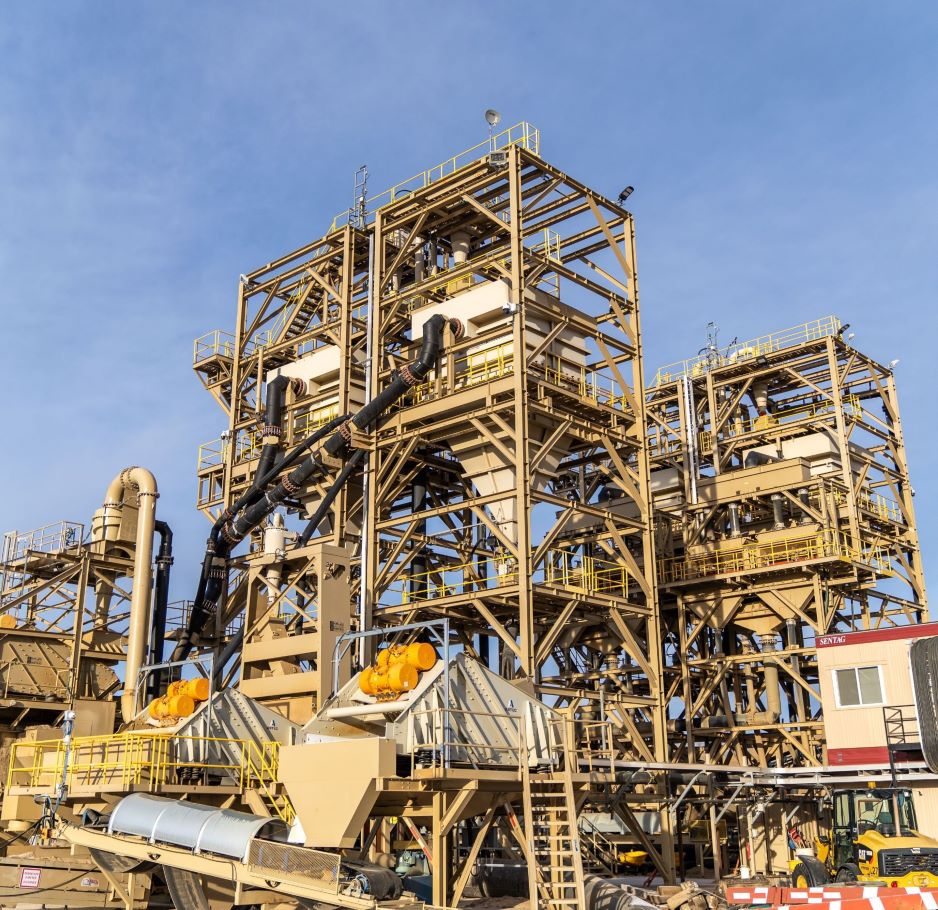
Peaskie Minerals Inc. mines and processes sand in the Opal area north of Edmonton for hydraulic fracturing operations, as well as silica flour for cement. From there, it moves its product to transload terminals in Edson, Grande Prairie, and Beaverlodge, supplying some of the industry’s most prolific plays, such as the Montney and the Durvernay.
We want the pumpers and E&Ps to know that we're open for business,” says Peaskie CEO Keith Arsenault.
Planning Significant Growth
A family business, the company was founded by the current owners’ father, John Oleksyn, in 1980 as Mill Creek Sand and Gravel (1980) Ltd. to serve the construction industry and sports and recreation sector. Then, in 2004, they launched Peaskie Minerals to supply the energy industry with domestic frac sand, which now accounts for about 85 percent of its business.
“The brothers, together with their father, have worked tirelessly to grow the business from its humble beginnings into a leading Canadian supplier of frac sand and a prominent provider of non-energy aggregate products,” says Arsenault.
At Opal, Peaskie has invested in a property boasting large reserves of frac materials totalling more than 100 million tonnes, enough to maintain production for decades.
The company has significantly boosted capital spending to increase production. Only a few years ago, the company supplied around 500,000 tonnes of sand annually, which has since doubled to 1.1 million tonnes in 2024 and is expected to exceed 1.3 million tonnes this year.
Looking ahead, Peaskie forecasts capacity of 2.6 million tonnes in 2026, rising to 3.2 million tonnes in 2027.
A Strategic Edge
Peaskie’s processing and transload facilities are strategically located to service Western Canada’s major hydraulic fracturing basins.
“With some of the strategic moves we made in terms of land acquisition and the permitting support that we received from the province, we are really going to ramp things up,” Arsenault says.
Doug Horner, Peaskie co-chairman, echoes Arsenault’s sentiments. Horner says the Alberta government has been proactive in supporting domestic frac sand providers, removing barriers and roadblocks, and encouraging mining in the province.
“We have a resource that is mineable with permits in place, and thanks to the premier and the minister of environment and others in cabinet,” Horner says.
“We want our clients to know that there’s a source of domestic material they can use in the amount and substance quality that will meet the demand domestically as we continue to grow, and we are growing significantly.”
Arsenault emphasizes that the company is in a strong position. He says replicating what Peaskie has built would be very difficult, noting that it’s not a simple matter of investing in machinery. The company owns 3,600 acres of land, leases an additional 4,000-plus acres, operates sophisticated dry plants, and features a top-of-the-line ball mill for crushing and manufacturing silica flour for the cement industry, in addition to its transload and shipping capacity.
Building a facility such as Peaskie’s requires significant investment. Arsenault explains: “If you were to replicate the facilities we have, just for the equipment alone, you're looking at between $160 and $190 million.”
Expanding into B.C.
Peaskie currently ships frac sand from its Beaverlodge transload terminal into B.C. It will expand Beaverlodge by about 300,000 tons of transloading capacity annually but also plans to enter the growing B.C. market in a big way by constructing a transload facility with capacity of one million-ton in the province.
“We want to crack that door open wider in the B.C. marketplace, which is where the significant activity is,” Arsenault says.
The company would build a new facility in the Fort St. John area, north of the Taylor Bridge that crosses the Peace River. But before it commits to a terminal in the region, it wants assurance that the business will be there.
“We're in the preliminary discussion phase with potential customers because if we’re going to build a $25 to $30 million transloading facility, we won’t do that based on speculation,” he says. “We are open to additional engagement on this opportunity.”
The Benefit of Buying Local
Ensuring a secure supply of frac sand is vital for oil and gas producers. The U.S. Government considers the silica sand used for fracking and other purposes as a critical mineral. While frac sand doesn’t have the same designation in Canada, it's nevertheless an essential resource for Western Canada’s energy companies.
A lot of the frac sand used in North America is northern white sand, which is mined in the U.S. and traditionally considered higher quality than other types. However, Arsenault is quick to point out that locally sourced sand works very well in most formations in Alberta and B.C. and is more cost competitive compared to imported sand.
While Arsenault believes the Canadian energy industry will continue to import U.S. frac sand to meet some of its demand, Alberta sand is expected to continue gaining market share.
He believes Peaskie and other domestic suppliers are close to eliminating any issues of security of supply, which means that, regardless of the trade relationship between the U.S. and Canada, the Canadian energy industry can rely on domestic supplies of frac sand. It's a stable domestic supply, and it provides employment in the province of Alberta.
“Between the quality, the security of supply and the pricing, we have a pretty strong competitive position.”
A Proud Alberta Story
“It’s also about supporting the local economy,” Arsenault adds. “The royalties we pay to these small communities make a big difference to their bottom lines and we would rather employ Albertans to support the industry in Alberta and B.C.”
Horner is proud that Peaskie is a homegrown Alberta success story, which he calls “a little gem” that few know about. He says the company has forged strong relationships with the counties, and that those same counties are very supportive of what Peaskie is trying to achieve.
“They see the benefit and the potential for jobs in the economy in Alberta, which is something that not a lot of people know about.”
The brothers, Nelson, Tim, Mark and Jason Oleksyn, take great pride in the hard work and dedication of their employees, as well as the significant investments made in the communities and the company. These efforts have created valuable employment opportunities, increased investment, and fostered strong community involvement.
The company has generated stable revenue for the communities in which it operates, revenue that continues to grow alongside the business. Committed to sustainable operations, they look forward to a future marked by increased domestic participation in the frac sand sector and other key markets.