Natural gas/LNG Low Break-Evens Keep The Marcellus On Top
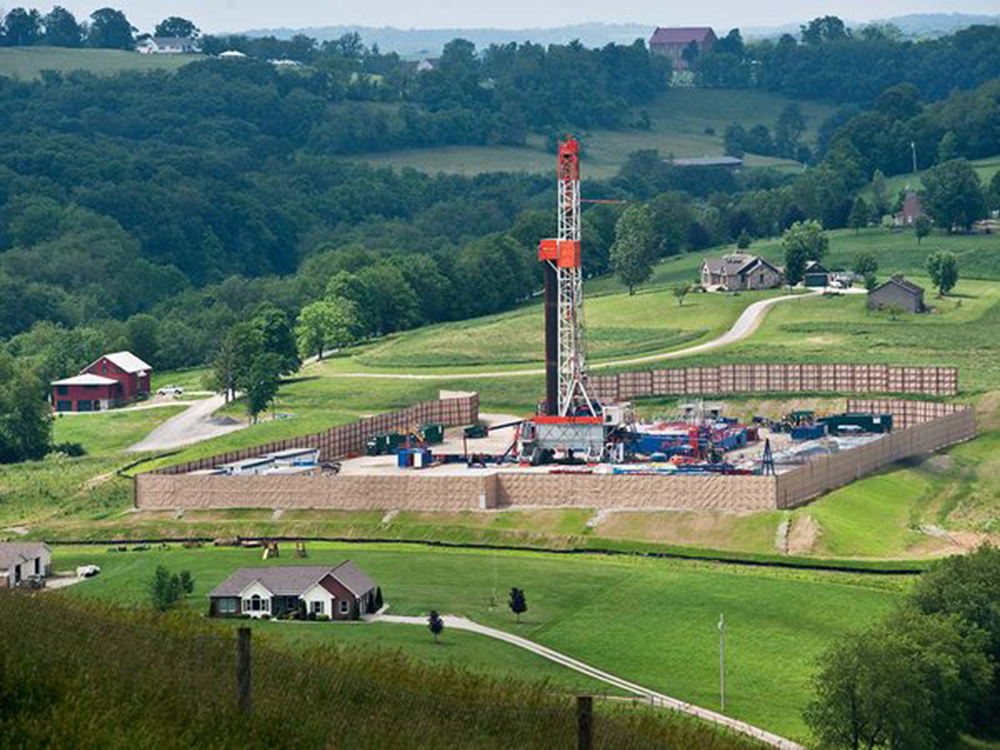
Low costs and a relentless approach to capital efficiency has maintained the Marcellus as the top producer of natural gas among U.S. shale formations, despite low gas prices over the past two years.
Marcellus break-even prices in certain areas are below $2/mmBtu for producers such as EQT and Expand Energy.
“We have a huge amount of inventory at very, very low cost in the Marcellus,” said Nick Dell’Osso, CEO of Expand Energy, on the firm’s Q4 results presentation.
Meanwhile, prices of at least $3.50/mmBtu are needed to produce profitably in regions like the Haynesville of East Texas and Louisiana — the chief rival to the Marcellus in terms of U.S. shale production — said Gordon Huddleston, president and Partner of Aethon Energy, at the Goldman Sachs Energy, CleanTech & Utilities Conference in January.
Content for this insight was researched using Evaluate Energy Documents.
The Marcellus advantage
Wells in core areas of the Marcellus tend to have much higher initial production (IP) rates than, for example, the Haynesville. Marcellus wells are on average only 4,000 - 8,500 feet deep, compared to 10,500 - 13,500 feet deep in the Haynesville.
Increasingly long laterals — easier to execute in shallower plays — help firms improve capital efficiency in the Marcellus. EQT and Expand Energy have set drilling records.
“The way we find to enhance the economics [in the Marcellus], is by extending lateral lengths,” said COO Josh Viets on Expand Energy’s Q4 results.
LNG growth could benefit the Haynesville
The Marcellus advantage over the Haynesville could be weakened by expanding LNG operations in the Gulf Coast area.
In April, the EIA updated its forecasts for Henry Hub gas to show a price rise of 1.9 per cent to $4.27/ mmBtu for 2025, and 2.7 per cent to $4.60/mmBtu for 2026. This is driven by a faster-than-expected increase in exports from the Plaquemines and Corpus Christi Stage 3 LNG projects. Exports are expected to grow further out to 2027.

The Haynesville formation is much better placed to serve this export demand.
BP says a $4/mmBtu Henry Hub spot price would create margins for its Haynesville assets equivalent to a $70/bbl oil price in the Permian. The firm currently operates two drilling rigs but may ramp up production this year.
Despite this growing Haynesville competitiveness, the Marcellus’ low operating costs and improving pipeline links from the U.S. northeast equip it to compete effectively with its southern neighbour.
In 2024, the Henry Hub price average was at a $0.55/mmBtu premium to the Eastern Southern Gas price (the local hub for Marcellus production), meaning that, as long as break-evens are greater than that differential, Marcellus production should still be competitive with the Haynesville going forward, assuming the spread does not grow. The current differential in average break-evens is over $1/mmBtu.
Additional capacity is still needed for the Marcellus to fully profit from these markets.
“To fully realize our potential and maintain our leadership position as a country, we have to be able to unlock some of the nation's largest natural gas resources in places like the Marcellus and the Utica,” said Williams CEO Alan Armstrong, speaking on the firm’s Q4 results.
Source: Williams Q4 2024 Results Presentation – Available via Evaluate Energy Documents.
On April 1, Boardwalk Pipelines (BWPL) announced a non-binding open season for Borealis, a two bcf/d expansion of the Texas Gas Transmission (TGT) system that would connect Marcellus gas to Gulf coast markets.
DT Midstream's Louisiana Energy Access (LEAP) pipeline is also expanding capacity to 2.1 bcf/d by the first half of 2026.
Northeastern demand and data centres
Even if the Haynesville does end up benefitting from its proximity to the Gulf Coast for expanding LNG exports, the Marcellus will benefit from its proximity to the natural gas demand centres of the northeastern seaboard and data centres in Northern Virginia.
The PJM transmission organization that serves the area expects further significant rises in power demand in coming years. Data in its 2025 Long-Term Load Forecast Report predicts increases from winter-peak levels of ~136 GW in 2024/25 to over 200 GW by the end of the 2030s.
Other producers in the region are eyeing this increase in power demand.
“We fully expect that there’s going to be power demand conversations and AI and data centre type growth opportunities in the basin,” said Dennis Degner, CEO of Range Resources, on the firm’s Q4 results.
Range’s outlook includes around four bcf/d of increased gas demand from the domestic power sector by 2030, with the potential for an additional two bcf/d.
Enabling connections to this growing industrial demand, as well as to Gulf Coast markets, will be a key factor in the Marcellus maintaining its position as the leading gas-producing shale in the U.S. for years to come.
Content for this insight was researched using Evaluate Energy Documents.