Potential Peak In U.S. Shale Has Some Companies Looking Elsewhere For Future Oil Growth
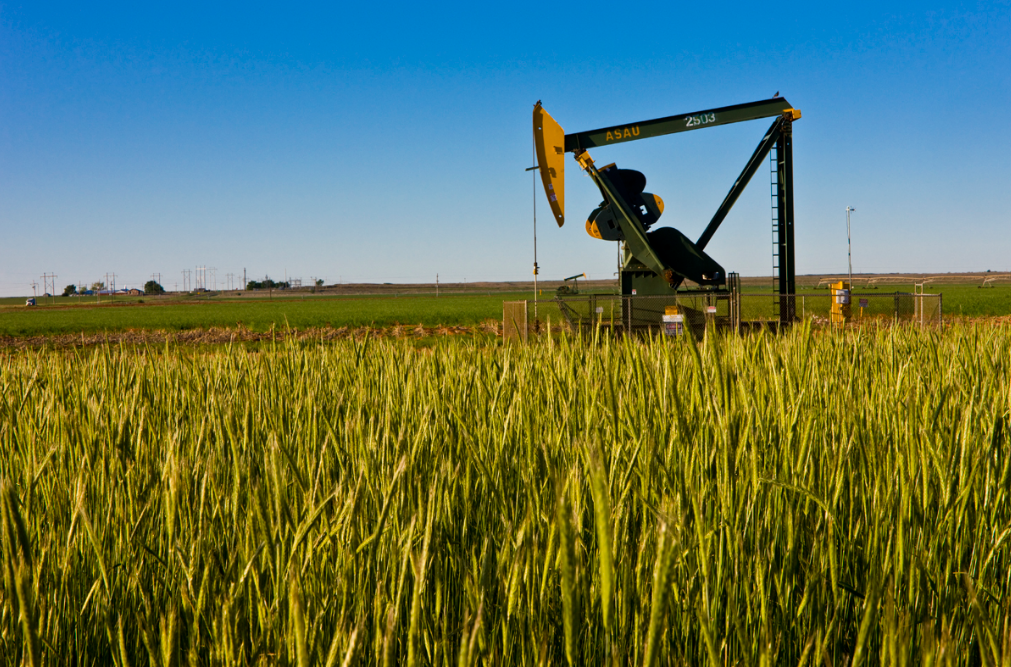
Current low oil prices could speed peak oil production from U.S. shale plays, and some companies are making plans to grow their business elsewhere if it comes to pass.
Most U.S. shale basins have either plateaued or starting to decline, except the Permian Basin in Texas which was covering for the lack of production growth from other basins, Occidental Petroleum Corporation chief executive officer Vicki Hollub said at its first quarter 2025 earnings call.
But current lower prices and declines in activity could result in the Permian peaking earlier than expected, Hollub said.
“We had expected the Permian to continue growth through 2027, and we had expected that U.S. production overall would peak between 2027 and 2030. It’s looking like with the current headwinds, or at least volatility and uncertainty around pricing and in the economy with recessions and all of that, it’s looking like that peak could come sooner.”
Occidental is prepared for the peak, whenever it comes, she said.
The company has approximately 14 billion bbls of oil resource across its global footprint including 4.6 billion bbls of proved reserves. Sixty per cent of proved reserves and 55 per cent of total resources are shale.
Its remaining shale resource could provide 10 to up to 15 years of future development, she said.
“What people don't usually get is that we also have, in addition to the shale, about six billion bbls identified today of resources in conventional areas around our company.”
“And I believe that six billion bbls of additional resources is light when you consider the fact that we're doing AI work in the Gulf of America [Gulf of Mexico]. We're also doing some work around waterflooding, doing additional enhanced oil recovery there, production optimizations,” she added.
“So, the Gulf of America [Gulf of Mexico] is going to add to the six billion of conventional that we have.”
It also has resource upside in both Algeria and Oman, Hollub said. Once appraisal and other work is completed on these assets, “we are almost going to be equivalent from a conventional resource perspective as we are from a shale perspective.”
Add to that CO2 EOR, Hollub said, which will not only extend the productive life of reservoirs in the U.S., but in Oman, Algeria, and potentially in Abu Dhabi as well.
“We do have a lot of additional resources. We've made the transformation from an asset standpoint.”
ConocoPhillips is focused on low cost of supply, said company chief executive officer Ryan Lance when questioned by analysts on whether it would start more aggressively diversifying away from the Lower 48 unconventional production.
“We’re a bit indifferent is to gas, oil, U.S. Lower 48, international. We like the diversity in the portfolio,” he said.
“All things being equal, there are areas we’d like … to grow to kind of offset the profiles of unconventional. But it’s all about the cost of supply first and foremost.”
The company wouldn’t be averse to adding more opportunities through M&A, he said. But it would have to out-compete current assets and opportunities.
“We pay close attention to it, but we’re first and foremost focused on delivering our plans and delivering what we’ve got in the portfolio and executing whether it’s in Norway, Alaska, Canada, Lower 48, the Middle East, or the Far East.”
“Having that diversity is important. We like it. But we’re not trying to go after it if that ends up being a higher cost of supply that just doesn’t fit our model.”
Service companies looking offshore and international for future growth
Oilfield equipment manufacturer and provider NOV is keeping watch on where U.S. shale is headed, said chief executive officer Clay Williams.
“U.S. shales have been the most extraordinary phenomenon ever witnessed in this industry. It accounted for almost all incremental global production through the past decade, adding about seven million barrels of oil per day and crowding out offshore investments along the way,” said Williams.
But U.S. production will peak sooner or later, he said.
“And in the coming decade, we believe incremental production growth will come from a combination of deepwater and international shales.”
Technological advancements have delivered material improvements in drilling and production in the deepwater, said chief financial officer Jose Bayardo.
These advancements are allowing the industry to push into highly prolific frontiers impossible to access just a few years ago.
“We’re drilling deeper wells and deeper water in harsher conditions with higher pressures through tighter pore pressure windows, and we’re doing this with amazing efficiencies.”
Deepwater drilling efficiency gains are similar to those realized in the U.S. land market, he said. High spec seventh generation rigs are drilling at rates 30 to 40 per cent faster than they were a decade ago.
“Much of what the deepwater industry is developing today has a breakeven in the US$40/bbl range, the result of incredible technology and industrialization.”
New equipment capable of operating at high pressures has opened up the Paleogene formation in the Gulf of Mexico to production and is now driving exploration in other previously untouchable, extremely high-pressure reservoirs in other parts of the world, he added.
Unconventional development in Argentina and Saudi Arabia will provide future gas supply growth, said Bayardo.
Saudi Aramco expects to reach 200 mmcf/d of production from its Jafurah field this year, with plans to grow to two bcf/d by 2030. Jafurah holds an estimated 230 tcf of gas and 69 billion bbls of condensate. It expects to produce 630,000 bbls/d of condensate in five years as well, along with around 420 mmcf/d of ethane.
In Argentina oil production in the Vaca Muerta shale play reached approximately 450,000 bbls/d at the end of 2024. Rystad Energy expects it to eclipse one million bbls/d by 2030.
The U.S. EIA estimates there are 16 billion bbls of recoverable oil and 308 tcf of gas in the play.
Big U.S. drilling and completions companies are already moving equipment in anticipation of increased activity.
Hendrick and Payne reported it has five of eight planned high-spec rigs on the ground in Saudi Arabia. The company brands its high spec rigs as FlexRig.
“The FlexRig is going into Saudi to do nothing but unconventional drilling, which is what we’re doing in Argentina, which is what we’re doing in Australia,” said chief executive officer John Lindsay.
He expects other North American contractors with spare high spec capacity to begin moving rigs into international markets to drill unconventional or complex reservoirs as well.
Halliburton Company also sees the global unconventional market taking flight.
“I expect it will grow faster than other market segments over the next few years,” said chief executive officer Jeff Miller earlier this year.
Halliburton was recently awarded a multi-year unconventional drilling services contract in the Middle East and just started up an unconventional fracturing fleet in the region, he said.
“We see several other growth opportunities for Halliburton in emerging unconventional plays.”