‘Massive Unforced Error Coming’ As U.S. Tariffs Expected To Start Shortly After Inauguration
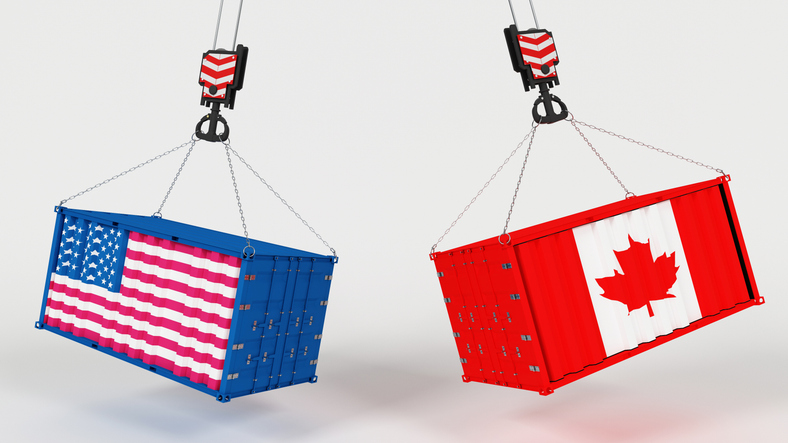
“To say that people are worried would be a vast understatement … because they’re seeing this massive unforced error coming.”
Canadian business strategist Eric Miller, president of Washington, D.C.-based Rideau Potomac Strategy Group, and a fellow at the Canadian Global Affairs Institute (CGAI), has been gauging the mood in the U.S. capital, with Jan. 20’s inauguration of Donald Trump expected to lead almost immediately into his promised imposition of 25 per cent import tariffs on Canadian goods, including energy, oil and gas.
Less than a week before the ceremony, Miller told DOB Energy that industry and business leaders he has spoken to are saying, “Do we really have to do this? Why do we want to do this?”
“Absolutely everybody, regardless of the sector, is worried because we’re essentially throwing out the whole way that we’ve done business for the last 30-plus years, and are going to something radically different,” Miller said.
“Your cost structure is changing. If you’re in the oil industry, you're looking at tariffs on U.S. imports of Canadian oil. There’s that little detail that all those refineries in the Midwest that are configured to deal with Canadian heavy crude don’t have a lot of other options. And there’s the whole question about availability of oil in the U.S. system and what it’s going to cost.”
Miller said the impact on this longstanding interconnectedness could best be expressed by tariffs on the auto sector, where the average vehicle crosses the border up to eight times as it’s put together.
“And each time a sub-assembly crosses, it’s got to pay a 25 per cent tariff to come into the U.S., more if Canada retaliates, whatever the Canadian tariff is,” Miller said.
“Energy is the foundation of a modern economy. When you put tariffs on energy, you’re layering in costs that just weren’t there before. And of course, you think about all of the things that are petroleum products … the plastics, … asphalt,… everything that gets carried with a truck or flown with a plane. All of this now is going to be dutiable.”
How will tariffs be put into action?
Miller believes tariffs will be initiated the same day Trump takes office, after confirming it with a businessman who spoke to the president-elect at the same Mar-a-Lago event attended last weekend by Alberta Premier Danielle Smith.
“The sense is that they’re going to use the International Economic Emergency Powers Act of 1977. It has never been used for trade purposes, but its predecessor, the Trading with the Enemy Act, was used when the U.S. went off the gold standard in 1971,” Miller said.
The U.S. Customs Service, now expanded and renamed the External Revenue Service (ERS), will collect the funds.
“[The ERS] is going to have to put all of this into their systems and figure out how to collect it, but that’s a technical matter,” Miller said.
“And the energy companies in Western Canada have never paid tariffs, so they’re going to have to build all that into their compliance and management systems, which is not going to be a fast or easy process.”
Mr. Wilkinson goes to Washington
On Thursday, Federal Minister of Energy And Natural Resources Jonathan Wilkinson went to Washington, DC, to speak at the Woodrow Wilson Center Canada Institute. As a global fellow at the center, Miller was there.
“A number [Wilkinson] used which I thought was interesting, was that they’ve calculated that tariffs will raise the price of a gallon of gasoline at the pump by around 75 cents a gallon on average in the U.S.,” he said.
Wilkinson’s key pitch, extensively discussed in the media, was the need for a Canada-U.S. energy alliance.
“It was well received by the Americans in the room,” Miller said.
“The idea is, ‘why are we not acting in the same interconnected way [with policy] that we actually are in practice?’ That was really his focus.”
Similarly, at a recent dinner he attended, Miller said he spoke to a top American oil analyst about the tariffs, and was told an Arsenal of Energy program, similar to Franklin Delano Roosevelt’s Arsenal of Democracy, should be created.
“Canada already supplies 60 per cent of all the oil imported by the United States. And it’s got the pipeline networks and the refinery system. We obviously could use more pipelines, but that’s another story.”
Miller said Wilkinson pitched to a friendly audience because the people who tend to go to hear him in Washington are the experts in the field, the reps from the trade associations, or from the American Petroleum Institute (API).
“They know what the issue is, but they’re not the problem. The problem is Donald Trump and his views on tariffs,” Miller said.
“There’s a certain resignation here that pain is going to have to be felt before there becomes to be an acknowledgment of what interconnection really means and the advantages that it delivers.
“In essence, there’s a sense that, you know, maybe we’ll get to a better place over the medium term.”
This is part one of a two-part series. Part two, with Eric Miller’s advice for Canadian energy companies and organizations in organizing to meet the tariffs issue, is coming in the next installment.