Natural gas/LNG Natural Gas Versus Coal Emissions Debate Driving U.S. LNG Export Terminal Pause
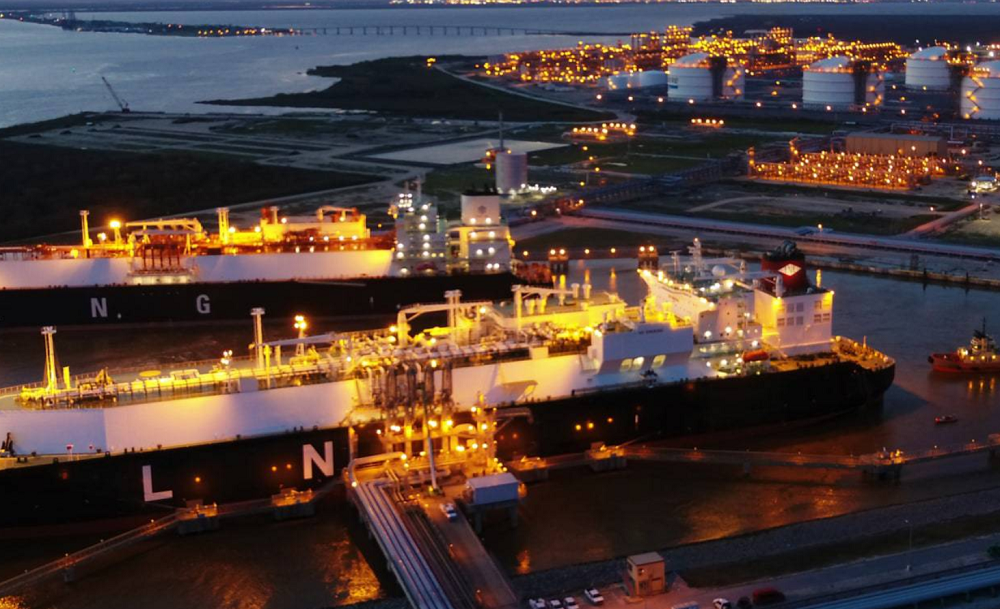
The U.S. federal government’s pause in LNG export project approvals pending a review of their climate change and economic impacts in January has rekindled the debate on whether replacing coal-fired power generation with natural gas generation will reduce global emissions.
At the centre of the dispute is a preprint study by Cornell University professor Robert Howarth that claims the life cycle emissions of LNG are up to 2.7 times higher than coal when used for power generation.
Howarth’s study, released prior to peer review in late 2023, has been used by some politicians and environmentalists to justify the pause in LNG development, and to push for a permanent ban on development.
The study says that while coal releases almost twice as much carbon dioxide as natural gas when combusted, when you look at the life cycle impact over 20 years, including extraction, liquefaction, tanker transport, regasification, final distribution, and combustion, LNG emissions are “substantially higher.”
It claims LNG emissions are 12.3 per cent higher than coal when the gas is carried over a shorter distance on tankers fueled with natural gas. LNG has 2.7 times the emissions when shipped on tankers using bunker fuels.
Cheniere Energy Inc., the largest LNG exporter in the U.S., believes the study is wrong, and should be disregarded, said president and chief executive officer Jack Fusco at the company’s first quarter 2024 earnings call.
“Peer-reviewed studies examining U.S. LNG delivered to China for power generation estimate that coal-to-gas switching results in approximately 50 per cent lower greenhouse gas emissions on a full life cycle basis,” Fusco said. “These findings are based on an extensive body of research, including our own peer-reviewed life cycle assessment utilizing data specific to our supply chain including operational data.”
“We strongly disagree with recent research, which claims the opposite while utilizing cherry-picked assumptions, and that has not gone through peer review,” he added.
Cheniere produced its own peer reviewed life cycle analysis (LCA), published in the American Society of Chemical Engineers, and the company continues building on its analysis, said Fusco.
“We’re using more measured data versus calculated data,” he said. “The inputs to our LCA are somewhere around 1,200 inputs that we plug in to come up with our cargo emission tags that we deliver on every cargo of our LNG. We’re getting better and better at it.”
Cheniere also worked with the Department of Energy (DOE) to develop the LCA, which is available for others to use, Fusco added.
“It’s a directional LCA for those people that maybe don’t have the resources to calculate what their life cycle emissions are. It’s an open architecture. It was released in April in Washington.”
The DOE is expected to complete its review of the economic and climate impacts of LNG exports in the next few months. After that, a decision on whether to end the pause will be made.
Twelve U.S. LNG projects in development with around 90 mtpa of proposed export capacity have been paused a result of the DOE review, according to the Global Gas Infrastructure Tracker. This equals around one-quarter of all LNG export capacity in development in the United States.
In the near term, only 14 per cent of potential capacity additions over the next three years are affected by the pause.