Low Carbon Solutions Will MethaneSAT Influence Canadian Regulations?
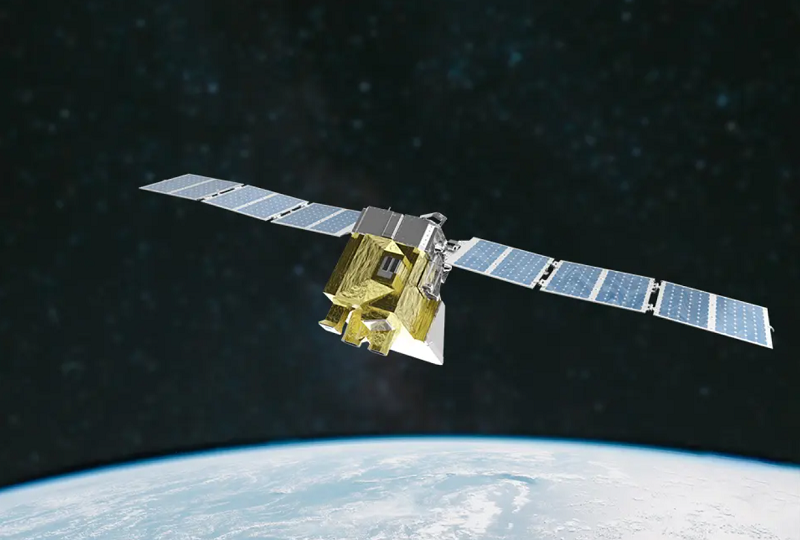
A Google-supported satellite said to provide better coverage of methane emissions and deliver this data publicly is providing another source of information to consider, say some government officials.
This past March, MethaneSAT, developed by a subsidiary of Environmental Defense Fund (EDF), detached from the rocket that carried it into space. MethaneSAT emissions data will be available to view on the MethaneSAT website in early 2025, according to EDF.
At Methane Leadership Summit 2024 by Petroleum Technology Alliance Canada (PTAC) in Banff, members of a panel focused on challenges and opportunities in the policy and regulatory landscape were asked about the space mission.
Moderator Don McCrimmon, manager, air, Canadian Association of Petroleum Producers (CAPP) noted the satellite is getting a significant amount of media attention, acknowledged vetting this third-party data would be difficult, but asked how it could be weaved into policy making or compliance.
Laurie Pushor, president and chief executive officer, Alberta Energy Regulator (AER), one of the panel members, said there are two parts to how this moves forward.
“We will look at any and all information we can find,” he said. “The better our sources, the more we understand what’s available, what's out there, the better informed we're going to be in our work in compliance and our work in building out new regulatory structures.”
“ … We're going to welcome any and all sources of information.”
With that said, Pushor continued, there needs to be some confidence and verification around those sources of information.
“Then all of that will inform regulatory structures as we move forward,” he added.
Rhetorically asking aloud if one-size-fits-all is the path from a regulatory perspective, Pushor then touched on the potential for flexibility in the regulation.
“… But only when we understand all of those sources are we going to be able to build that flexible regulatory structure to find the best fit for the right applications.”
Pushor was joined by Deborah Westerman, executive director, resource management, ministry of energy and resources, Saskatchewan government; Don D’Souza, executive director of accountability, economics and analysis branch, B.C. government; and James Diamond, manager, technical operations and upstream regulatory team, Environment and Climate Change Canada.
To McCrimmon’s question, Westerman said she doesn’t think it’s the lone answer, but instead another tool, adding that it’s always a positive having specific Saskatchewan data in-hand.
“Another data set is great and we currently will not or don't have a plan in any terms of actual regulation that's out there, in order to use it for enforcement or anything like that, but it's another tool that we have that could indicate where there's an issue, where there's a problem, that we can go out and investigate further and that's probably the most practical approach to it for Saskatchewan to start,” she added.
There is a proliferation of data and new measurement approaches, highlighted D’Souza.
“… We need to be able to consolidate and bring them all into a common place to make sure that they are policy-relevant as well as business-relevant,” he added. “So, it's really going to depend on, what is that turnaround time for some of this information to make sure that we can both trust it, as well as act on it.”
Diamond wants to keep dialogue on this topic going.
“I’m hoping that we can continue that conversation, at least amongst this group and some other regulators that would see that data as relevant because I do think we need to co-ordinate an approach and maybe even able to gather that group together in a meeting in due time in the next month or so,” he added.
Federally, Diamond said there’s an obligation to consider third-party data in a regulatory context when it's presented. He added that this would not be an enforcement reference, but an “initiation of an action to consider in the regulations.”