CEO Interview: Keyera, Shell Plan Improved Access To Carbon Sequestration, Low-Carbon Energy
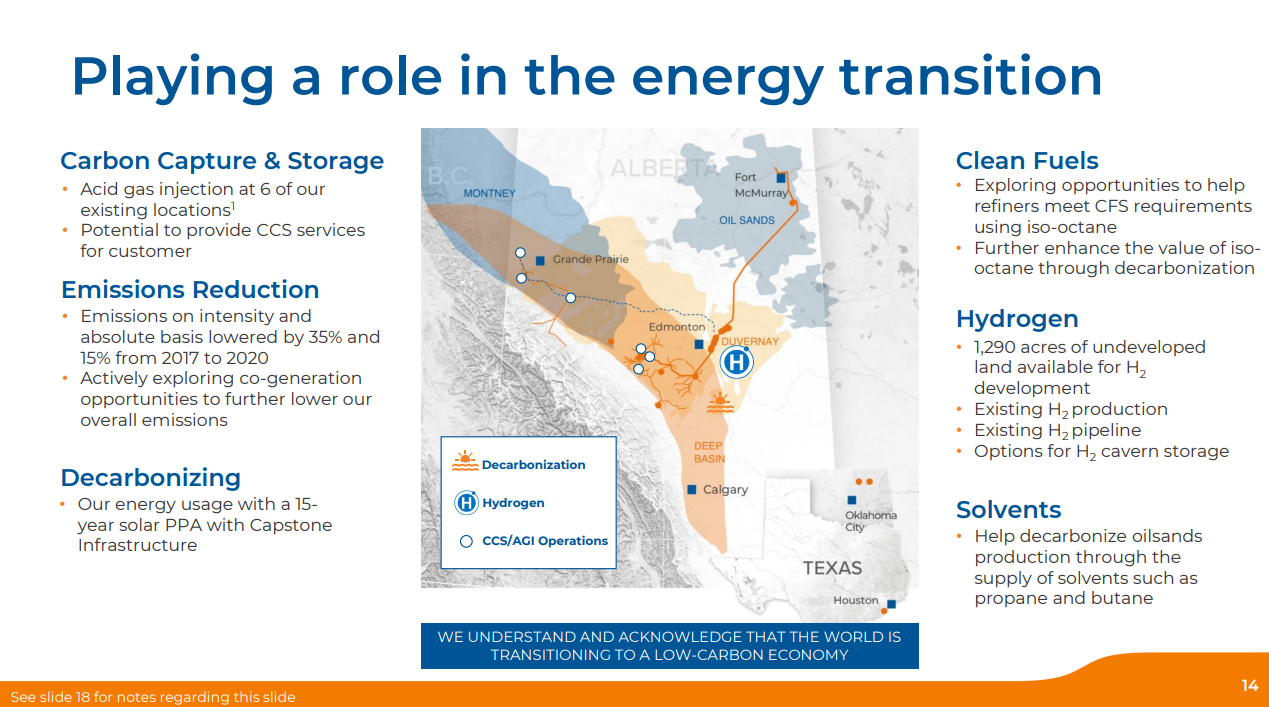
A gathering and distribution network to transport captured carbon dioxide is the focus of one of the projects Keyera Corp. and Shell Canada Ltd. will explore through a new agreement.
The two companies signed a memorandum of understanding to collaborate on potential low-carbon projects in the Industrial Heartland in Alberta, northeast of Edmonton.
This agreement will see Keyera and Shell leverage existing assets and adjacent lands. The aim, Dean Setoguchi, Keyera’s president and chief executive officer, told the DOB, is for Shell and Keyera to not only decarbonize their respective operations, but for the same to be achieved by their “industrial neighbours,” as well.
Presently, that involves work on two clean energy initiatives, which Setoguchi notes are in early stages.
One of these projects involves exploring opportunities to build a future open access gathering and distribution network to move captured CO2 from Keyera’s and other operations in the region to a proposed Polaris carbon capture and storage (CCS) hub by Shell.
The other is a hydrogen manufacturing and distribution network within the Heartland region. This involves leveraging an existing pipeline capable of transporting hydrogen.
“We know where the world is going and that’s to a lower carbon future,” said Setoguchi.
“The pace of that may be a bit uncertain, so what we’re trying to do is make sure we are part of that solution,” he added. “But it is going to be driven by demand and economics. And if that doesn’t exist, we have a lot of opportunities off our base business that we can continue to grow and prosper from.
“We want to make sure we are part of the transition when that demand is there.”
Calgary-headquartered Keyera is one of the largest midstream gas operators in Canada. The company covers the full midstream value chain from natural gas gathering to liquids fractionation as well as transportation, storage, and marketing.
This collaboration will make use of Keyera’s midstream model, creating an open access system that provides the opportunity for industry to have the same benefits: access to carbon sequestration and low-carbon forms of energy, says the company.
“It’s more about [Keyera] using our midstream model as a way to be the connection point for access to carbon sequestration or other forms of low-carbon energy like hydrogen,” Setoguchi said. “Our midstream model enables Keyera to capture and collect more carbon through our pipelines, be it our own or others, and deliver that carbon to Shell for sequestration.
“The same applies for providing access to low-carbon energy like hydrogen.
“Keyera is a customer-focused business, and we believe it’s important to create this sustainable opportunity for everyone,” added Setoguchi.
Focus on the future
When asked about funding these projects, from Keyera’s end of it, Setoguchi said “a lot of it will just be part of our regular capital allocation program as we think longer term.”
“We think this is well beyond 2025,” he added. “We already do have some assets to leverage like our hydrogen pipeline. From our perspective, the big investments are required by Shell in terms of the sequestration site and the hydrogen unit.”
This Keyera and Shell partnership builds on the value proposition in Alberta’s Industrial Heartland by developing regional infrastructure that supports industrial decarbonization in Alberta and Canada, says Mark Plamondon, executive director, Alberta’s Industrial Heartland Association.
“This collaborative approach leverages synergies across our region to advance industrial growth, inclusivity, and energy diversification while reducing greenhouse gas emissions, highlighting the region’s position as a leader in Canada’s low-carbon future,” he adds.
As Canada's energy system continues to evolve, companies both big and small will need to find ways to reduce emissions, said Susannah Pierce, Shell Canada president and country chair.
"The agreement with Keyera will drive increased collaboration to develop low-carbon energy projects and technologies that are needed by society in our journey to net zero,” she adds.
Setoguchi believes this market is starting to develop and these combined efforts can help enable it.
“I think it’s going to attract a lot of future business and industry right here to Alberta which is really great for our province and our country,” he said.
Companies looking to decarbonize are casting an eye to the future, preparing for hurdles such as a $170 per tonne carbon tax slated to come into effect in Canada in 2030, Setoguchi said.
“Those aren’t things you do at the last minute, you have to have longer-range thinking,” he added.
Setoguchi cites, for example, refiners in Alberta looking to decarbonize.
“That’s no secret,” he said. “And they are looking at plans that involve both carbon capture, hydrogen, and also some biocomponents of feedstock. They are already looking ahead at how they can accomplish that.”
“We just think this is starting to evolve and take shape,” Setoguchi continued. “The timing is more in the back half of the decade when we think this really develops. We just want to make sure we’re part of it when it happens.”
While the market may hit its stride down the road, there’s work that can be achieved today.
“As a company, we are looking at our own assets, of which we have several along that Industrial Heartland fairway in both Edmonton and Fort Saskatchewan and how we can lower our carbon footprint,” said Setoguchi. “We are looking at solutions for ourselves, but we are also talking to our neighbours along that fairway, too, to see what their needs are and how we can potentially serve them with this type of arrangement with Shell.”